Project for the Expansion of the Sewerage Network and Construction of the Wastewater Treatment Plant in the Village of Lamosa
Municipality of Sernancelhe
Introduction
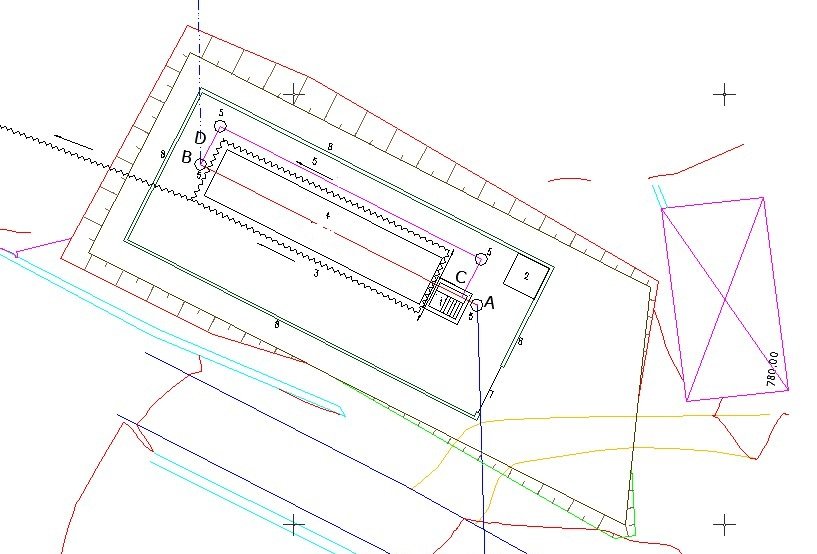
This technical project consisted of the design and implementation of an integrated solution for the expansion of the wastewater drainage network and the construction of a Wastewater Treatment Plant (WWTP) in the village of Lamosa. The intervention focused on providing this locality with modern sanitation infrastructure, ensuring the efficient treatment of effluents and safeguarding public and environmental health.
Context and Need
The intervention arose from the need to serve a population of 400 equivalent inhabitants, responding to the urgency of implementing a treatment system capable of meeting the discharge limits and minimum pollutant reduction percentages established by law (Decree-Law No. 152/97). The central objective was to replace the lack of infrastructure with a suitable technical solution for the flows and organic loads of the locality, guaranteeing the stability of the process even in the face of peak influent organic loads.
Summary of the Project Completed
The implemented solution was based on a biological treatment system using Extended Aeration, a technique selected for its high purification efficiency and low sludge production. The project encompassed the following fundamental components:
- Treatment System: Utilizing a cylindrical unit made of steel sheet with an approximate volume of 90 m³, where aeration (via fine bubble diffusion fed by a blower) and sedimentation operations occur cyclically (4 daily cycles of 6 hours).
- Purification Stages: The process includes a manual screening phase to remove coarse solids, followed by aerobic biological treatment that converts organic matter into stable products, ensuring a high-quality effluent.
- Electromechanical and Civil Infrastructure: Installation of air blowers, submersible pump sets, and an electrical control panel equipped with automation and alarm signaling. A ventilated support building was also constructed, and gravel and bituminous concrete paving was carried out to ensure access to the installation.
- Waste Management: The system allows for the aerobic stabilization of sludge, reducing the need for periodic removal (estimated every 2 years in a permanent regime), making it suitable for agricultural recovery.
The construction work included rigorous anti-corrosion finishes on the metal surfaces and meticulous leveling of all units, ensuring the longevity and full functionality of the station.
Would you like to learn more about sanitation infrastructure solutions? Visit our complete portfolio.
Discover how we can make your project a reality.
Get in touch with us and let’s create something extraordinary together.
ENVISQUANTIS, LDA
Links
Follow us on social media:
Copyright © 2025 Envisquantis, LDA