
Architectural projects and respective specialties for the pedestrian and cycle path between the main centers of the municipality, Sabrosa.
Municipality of Sabrosa
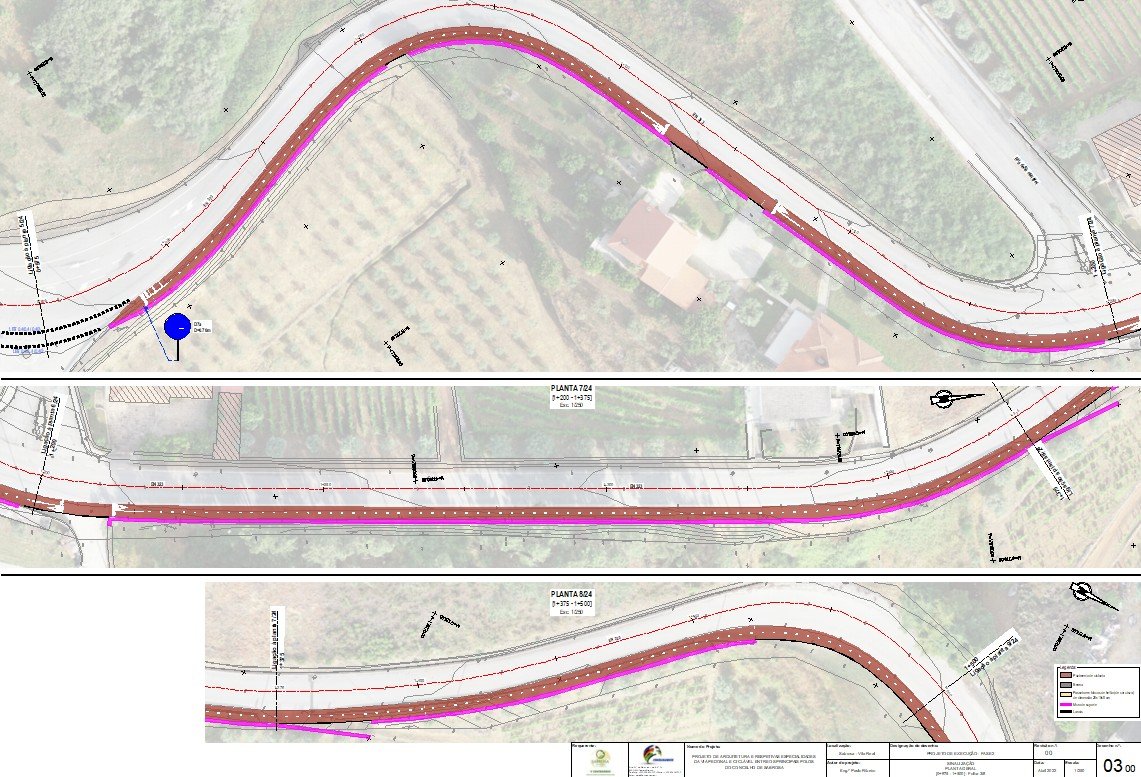
Summary of the Project Completed
The project execution was divided into two distinct phases, totaling approximately 7,910 meters of intervention (3,660m in Phase 1 and 4,250m in Phase 2).
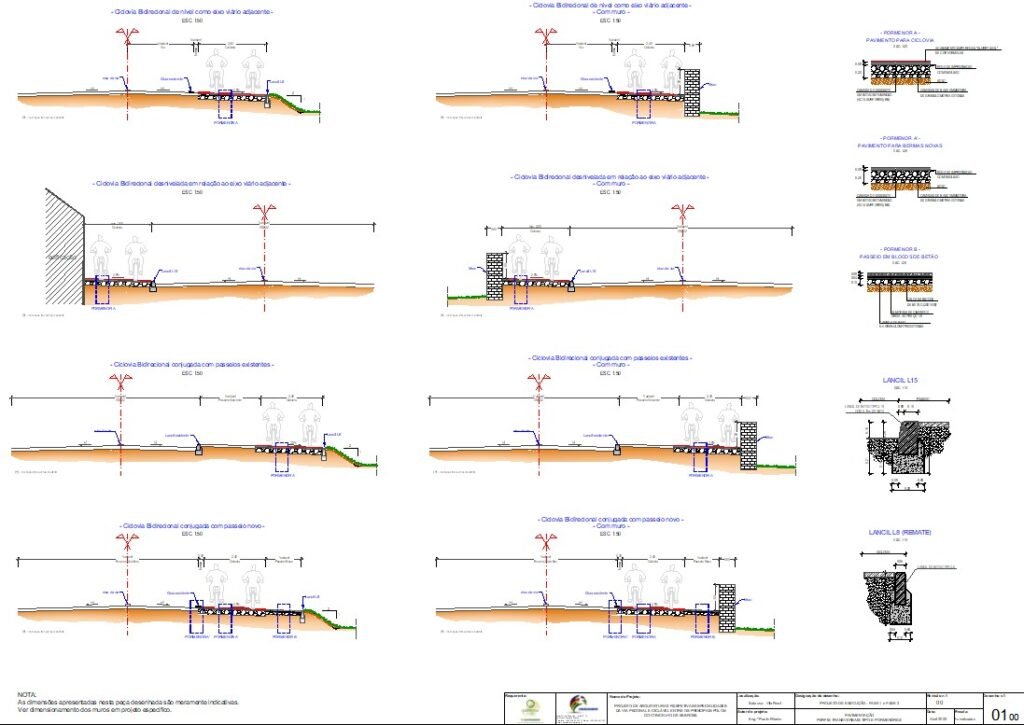
1. The Implementation Plan and Scenarios
The proposed cycle path consists of a dedicated two-way lane with a usable width of 2.40m, implemented mainly on the south/east side of existing roads.
Two main scenarios were defined, adapted to the reality of each section:
- Scenario 1 (Continuous Layout): Implemented in rural areas bordered by agricultural fields, where it was possible to develop a continuous layout. In these locations, the cycle path is at the same level as the road, separated only by the shoulder, and retaining walls typical of the region were planned to protect the agricultural land.
- Scenario 2 (Zone “30 + BICI”): Used in areas with high residential or service density (such as Av. Cidade de Cebu and parts of the EN323), where the lane space is limited. In these sections, segregation was not possible, so a shared lane with motorized vehicles was chosen, with a speed limit of 30km/h, marked with specific pavement signage.
2. Paving and Earthworks
- Bicycle Path Surface: The structure consists of a base layer of crushed aggregate (0.20m) and a bituminous concrete wearing course, finished with a red slurry seal surface, giving it a distinctive visual identity.
- Pedestrian Pavement: In the new sidewalk areas, rectangular concrete blocks are proposed over a cement and sand cushion.
- Earthworks: The project foresees the execution of substantial earthworks.
3. Signage and Drainage
- Horizontal Signage: Includes the painting of continuous green lines (0.20m) to delineate the shared lane “30 + BICI”, bicycle symbols, and priority yield triangles specific to the cycle path.
- Vertical Signage: Involves the relocation of existing signs and the implementation of new regulatory (prohibition, obligation) and hazard signs, in accordance with European Union standards, ensuring retroreflection and visibility.
- Drainage: The cross slope of the cycle path was oriented towards the adjacent land to ensure rainwater drainage. In cut areas, the construction of half-pipe gutters is planned, and the new walls will include culverts for water passage.
The specifications for this project refer to the Standard Works Specifications (CETO) of IP – Infraestruturas de Portugal, S.A., highlighting the rigor and technical compliance of the proposed solution.
Discover how we can make your project a reality.
Get in touch with us and let’s create something extraordinary together.

ENVISQUANTIS, LDA
Links
Follow us on social media:
Copyright © 2025 Envisquantis, LDA