
Surface Water Reservoir Architecture Project: Dressing Reservoir
Municipality of Sernancelhe
Introduction
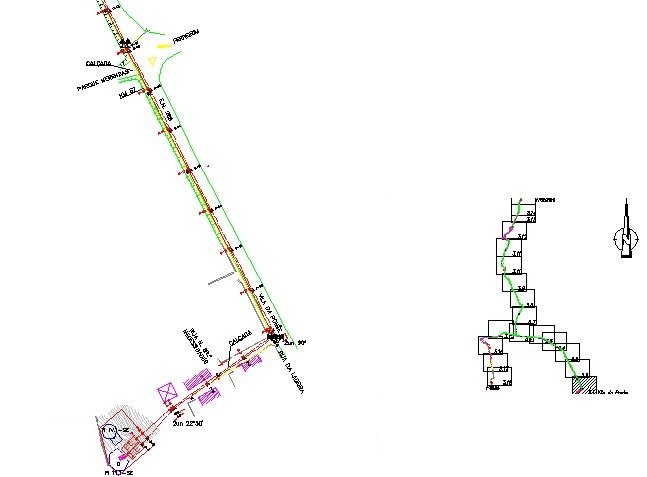
This technical article details the architectural design for the construction of a 50m³ surface water reservoir located in Penso. The infrastructure was designed to integrate a cylindrical storage cell and a technical control chamber, ensuring operational functionality and preserving the quality of the water intended for public supply.
Context and Need
The intervention arises from the need to reinforce the storage capacity in the local water supply system, specifically in the area where the Penso reservoir is already in operation. The technical challenge consisted of designing a structure that would connect with the existing unit, respecting the topographical survey of the site and ensuring an implementation that allows for future optimized hydraulic integration between the two reservoirs.
Summary of the Project Completed
The project focused on structural durability and the implementation of rigorous technical solutions for waterproofing and maintenance.
- Storage Cell: Cylindrical unit in reinforced concrete with a 4.60 m internal radius and a 3.00 m usable water height (total free height of 3.30 m). The upper face of the cell has a minimum slope of 1% to facilitate washing and water drainage.
- Maneuvering Chamber: Adjacent technical building in reinforced concrete and brick masonry, dimensioned to house piping, valves, and connections with adequate space for maintenance. Includes pneumatic or electric level indicators and natural ventilation.
- Waterproofing and Roofing: Multilayer system composed of lightweight expanded clay concrete, FlintKote paint, and asphaltic membrane with a slate finish. A 0.20 m thick heat transfer layer of earth was applied over the roof for thermal stability.
- Hydraulic Management: A boiler was planned at the bottom of the cell to allow for full utilization of capacity without suction of impurities. The bottom and surface drains were made of PVC, while the internal piping uses flanged ductile cast iron.
- Materials and Finishes:
- Use of AISI 316 stainless steel in internal staircases to prevent corrosion.
- Plastering in areas in contact with water using mortar with 500 kg of cement/m³ and waterproofing additive.
- Exterior painting with plastic paint over white primer.
- Use of AISI 316 stainless steel in interior staircases to prevent corrosion.
- Plastering in areas in contact with water using mortar with 500 kg of cement/m³ and waterproofing additive.
- Exterior painting with plastic paint over white primer.
- External Arrangements: Leveling of the terrain with compacted gravel, construction of ground-level stairs in cyclopean concrete to manage unevenness, and a perimeter fence 2m high.
The estimated timeframe for the complete execution of the project, including the structure and the control chamber, is six months.
Would you like to explore other water supply network engineering projects in our portfolio? Consult our case studies or, if you would like detailed technical information about our solutions, contact us directly through the form available on our website.
Discover how we can make your project a reality.
Get in touch with us and let’s create something extraordinary together.
ENVISQUANTIS, LDA
Links
Follow us on social media:
Copyright © 2025 Envisquantis, LDA