
Project for Water Supply and Drainage Networks at Cepos Farm
Parish of Pinheiro, Municipality of Aguiar da Beira
Introduction
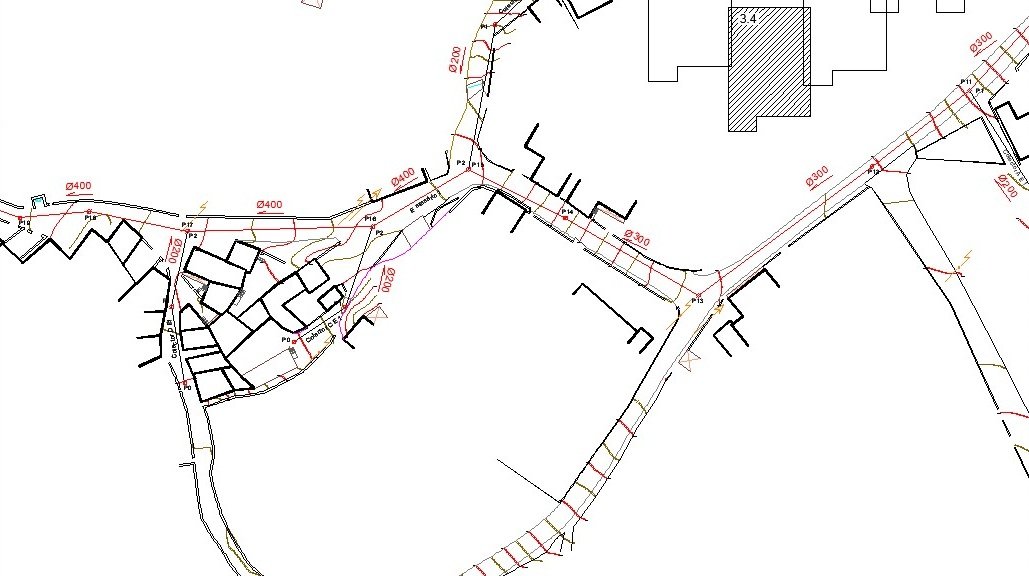
This technical project details the implementation of water supply and sewage infrastructure for the locality of Quinta dos Cepos, in the parish of Pinheiro. The proposed solution integrates the layout of the distribution pipelines, the domestic sewer network, and a sustainable biological treatment unit, ensuring efficient and environmentally responsible management of the settlement’s water resources.
Context and Need
The intervention at Quinta dos Cepos arose from the need to equip the village with modern sanitation and water distribution systems. For the water supply, the project was conditioned by the use of a pre-existing pipeline, requiring a route of approximately 1400m to minimize pressure losses. Regarding sanitation, the lack of an effective treatment system led to the design of a solution capable of serving 118 inhabitants, strictly complying with the discharge limit values (BOD5, COD and TSS) stipulated by Decree-Law No. 236/98.
Summary of the Project Completed
The infrastructure was divided into three fundamental pillars, adapted to the local topography and geological characteristics:
- Water Supply Network: Installation of PVC pipes (class 1MPa) with a diameter of 63mm. The system includes strategically located shut-off valves, bottom drains for maintenance, irrigation outlets, and tie rods at critical bends.
- Sewer Drainage Network: Installation of a PVC (200 mm) collection network with an approximate length of 2000 m. The network was designed to ensure self-cleaning flow velocities (between 0.60 and 3.00 m/s) and includes circular concrete manholes for inspection and cleaning.
- Wastewater Treatment Plant (Biological WWTP): Opt for a plant-based treatment solution using the Kickuth System (rhizospheric purification).
- Primary Treatment: Reinforced concrete septic tank with two compartments (30.24 m³) for sedimentation and anaerobic digestion.
- Secondary Treatment: Treatment bed (17m x 16m) composed of an “optimized soil” and planting of Phragmites australis. The plants transport oxygen to the substrate, supporting the metabolic activity of aerobic microorganisms and removing nutrients without negative visual impact.
- Landscaping and Paving: Due to the terrain, reinforced concrete retaining walls (B25) were constructed in terraces. The project was completed with the replacement of the pavements in bituminous macadam and the leveling of the access to the wastewater treatment plant with a gravel layer.
The solution stands out for its low need for electromechanical maintenance, limited to routine operations and monitoring of the biological system.
Would you like to learn more or get in touch regarding a sustainable sanitation project? Visit our full portfolio or contact us through our website.
Discover how we can make your project a reality.
Get in touch with us and let’s create something extraordinary together.
ENVISQUANTIS, LDA
Links
Follow us on social media:
Copyright © 2025 Envisquantis, LDA