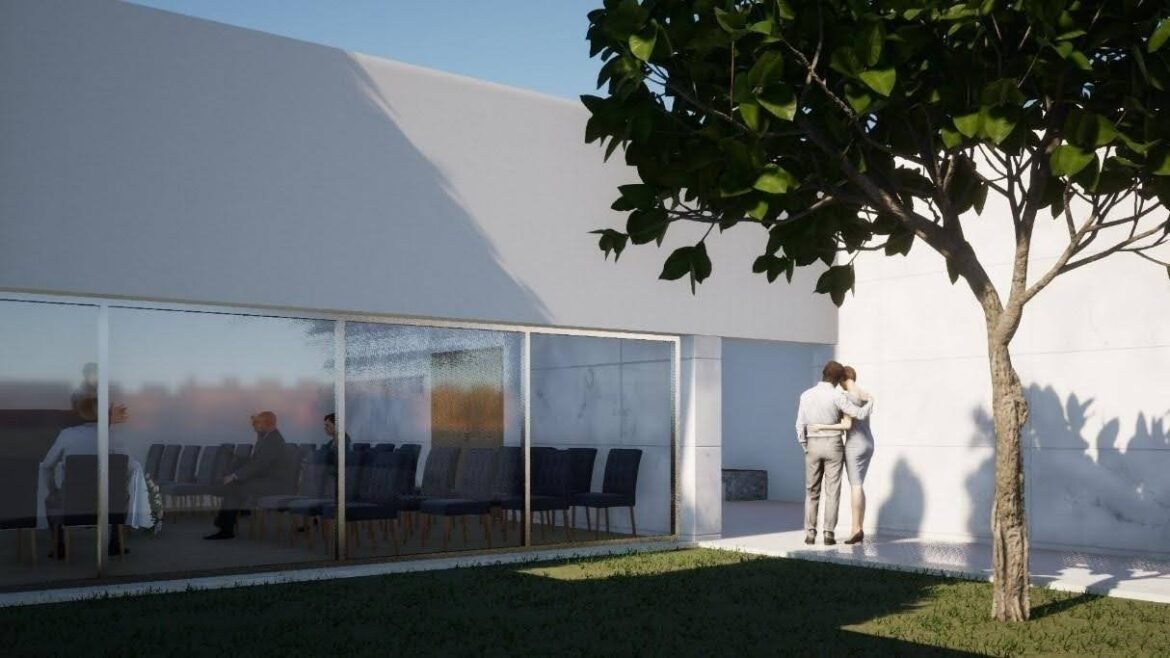
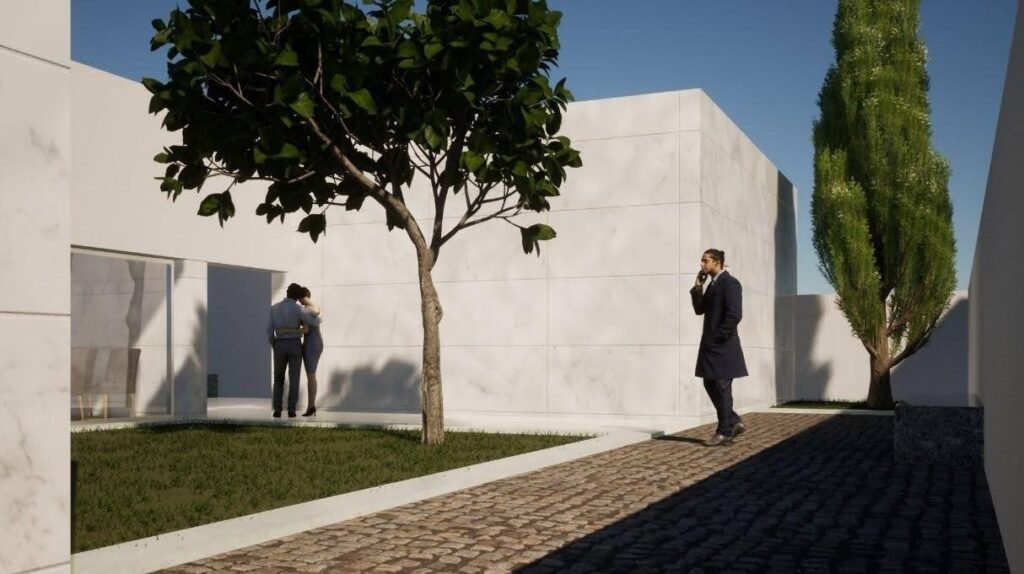
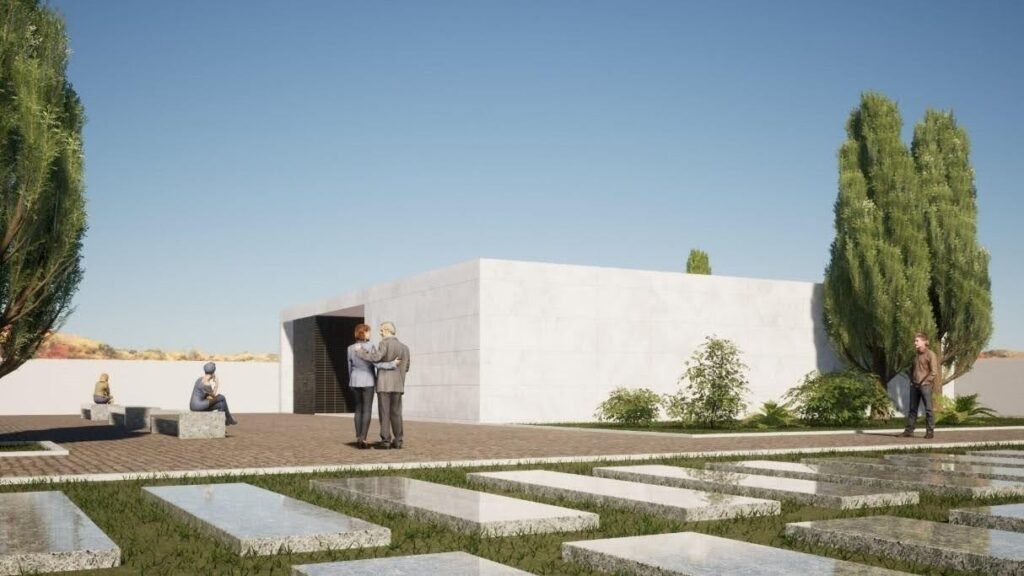
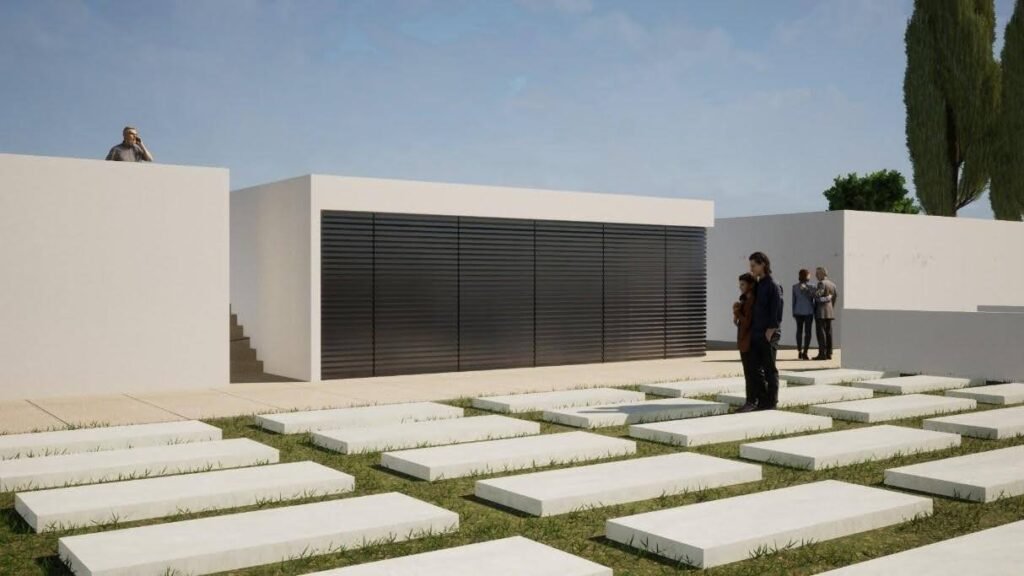
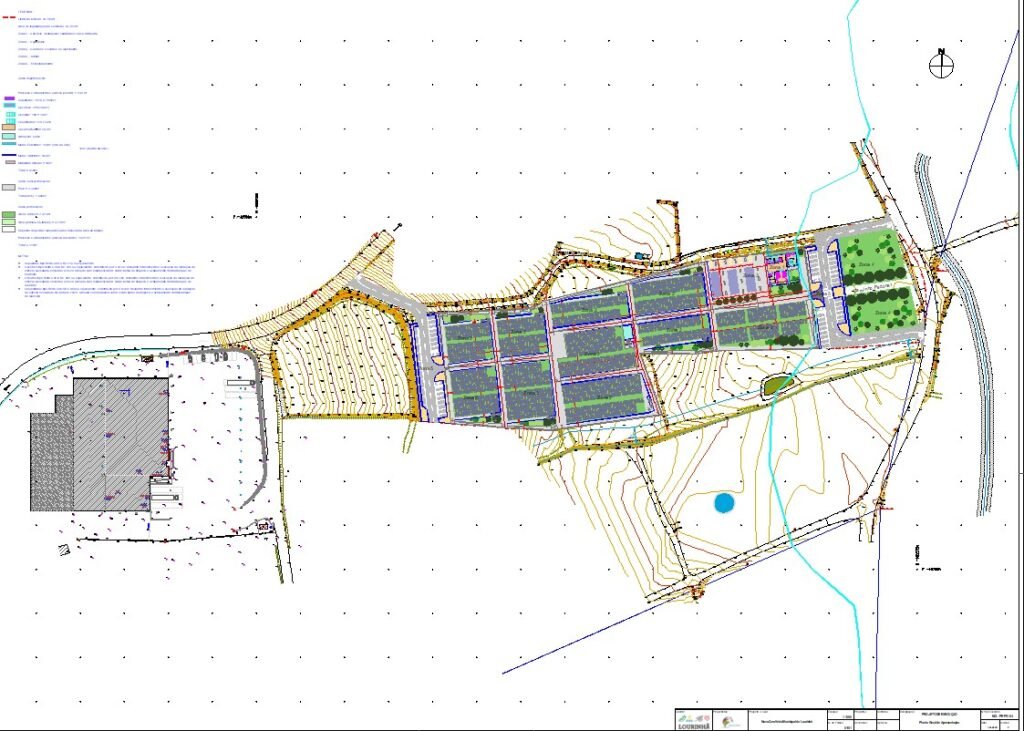
This article details the Execution Project for the construction of the New Lourinhã Cemetery, an infrastructure planned to serve the parishes of Lourinhã and Atalaia. Located near the existing municipal cemetery, the new facility was designed to allow for unified management of the two infrastructures. The project responds to rigorous planning that integrates road access from Rua Dr. Mário Batista Pereira and Estrada das Giesteiras, providing the area with new parking areas and pedestrian streets.
Context and Need
The urgency in undertaking this project stems from the fact that the current municipal cemetery is practically at full capacity, making its construction a public health priority. Given the impossibility of expanding the current structure, the Lourinhã City Hall acquired a plot of land measuring approximately 19,700 m2.
The proposal takes on added social relevance by seeking to respect the growing cultural and religious diversity of the population. The architectural concept moves away from specific dogmas to embrace a transversal spirituality, using the language of architecture to minimize the burden of loss and grief during a time of mourning.
Summary of the Project Completed
A solução técnica e concetual desenvolvida foca-se no equilíbrio dinâmico e na funcionalidade das valências:
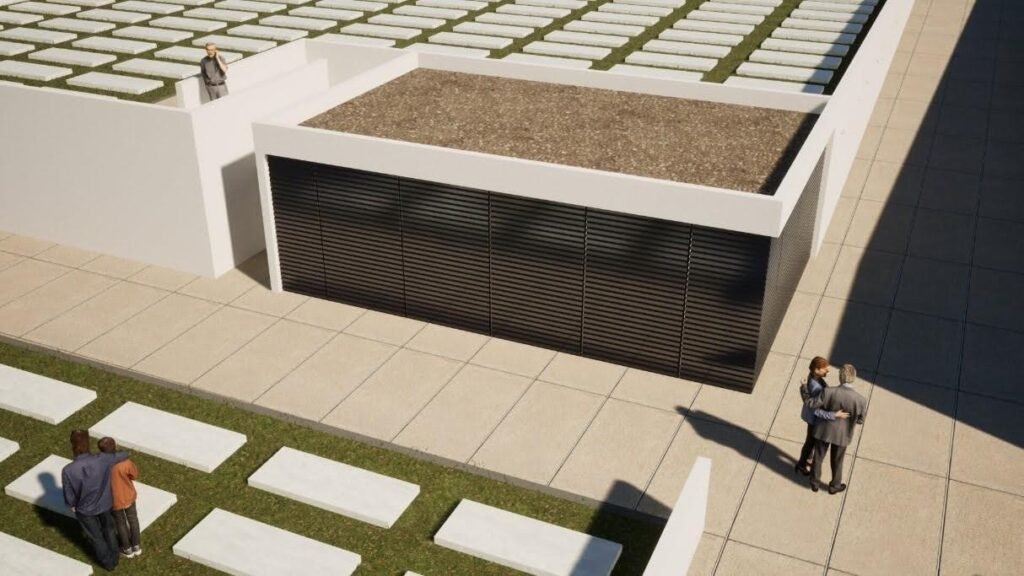
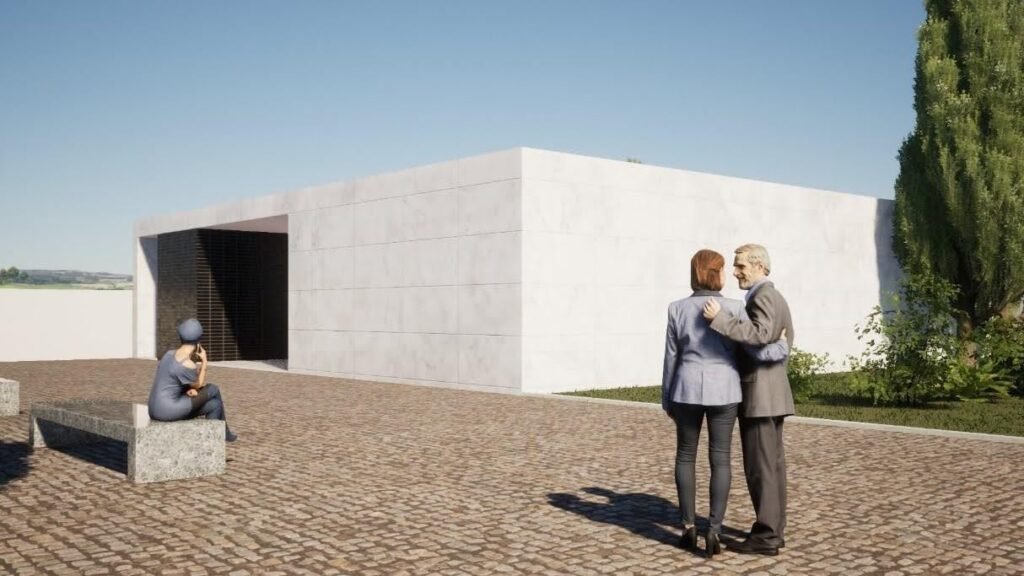
Architectural Concept (Yin-Yang): The project embodies the duality between life and death through the contrast of light, shadow, and materials. The use of white marble on the facades stands out in opposition to dark interiors, as does the warmth of wood in the funeral parlors in contrast to the coldness of the stone.
Spatial Organization: The cemetery is divided into five functional zones:
Zone 1: Services, sanitary facilities and mortuary (simple building);
Zone 2: 1,516 graves;
Zone 3: 288 vaults (3 levels), 180 ossuaries and 120 columbariums (5 levels);
Zone 4: Garden and green areas (approx. 2,973 m2);
Zone 5: Parking with 60 spaces.
Materials and Equipment: Use of permeable concrete in circulation areas to ensure permeability. Graves and tombs are constructed of prefabricated concrete elements. The surrounding walls, 2 meters high, and the internal walls are made of plastered and painted white masonry.
Accessibility: Implementation of longitudinal ramps and stairs for access to the plots, ensuring fluid pedestrian circulation. A specific space of 15 m² was also provided in each plot for the storage of tombstones.
With a vast portfolio of infrastructure projects and public facilities, Envisquantis ensures compliance with all technical and regulatory standards. We invite you to explore our complete portfolio to understand the depth of our work.
Need specialized technical support for your project?
Our team is available to collaborate on architectural and engineering solutions of exceptional quality. Contact us.
Discover how we can make your project a reality.
Get in touch with us and let’s create something extraordinary together.